Why Your Down Payment Matters
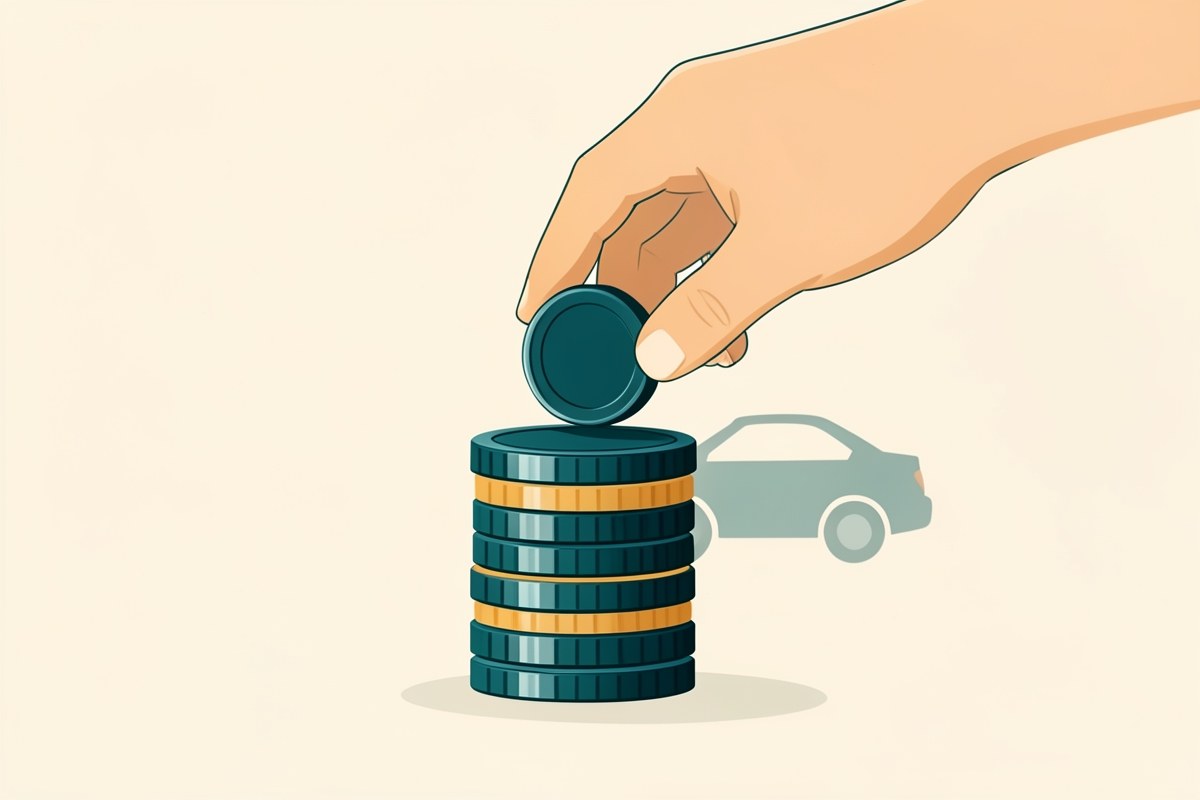
A down payment is an initial, upfront payment you make toward the total cost of the vehicle. It can be cash, the net proceeds from trading in a vehicle, or both. The more you put down, the less you need to borrow.
This matters because a larger down payment reduces the amount you finance, which usually lowers your monthly payments and the total interest you pay over the life of the loan. It can also influence the interest rate a lender offers you, as a higher down payment may reduce the lender's risk.
A substantial down payment also helps protect you from becoming 'upside down' on the loan—owing more than the car is worth. This is especially important because vehicles depreciate quickly, and making a smaller down payment can leave you with negative equity if the car's value drops faster than you repay the loan.
- A down payment is the initial cash or trade-in equity you put toward the car.
- It lowers the amount you need to finance, which reduces your monthly payment and total interest.
- A larger down payment may lead to a lower interest rate and better loan terms.
- It helps avoid owing more than the car is worth (negative equity).
Sources: Consumer Financial Protection Bureau, Kelley Blue Book, Investopedia, Diamond Credit Union
How Much Should You Put Down?
A common recommendation is to put 20% down on a new car. That figure is often cited by automotive experts because it helps ensure you start with positive equity and keeps your monthly payments manageable. However, many buyers actually put down between 10% and 12%, according to industry analysis.
Your ideal down payment depends on your budget, credit profile, and the loan terms you're offered. A larger down payment may be especially helpful if you have lower credit scores, as it can help you get approved or secure a better interest rate.
When deciding how much to put down, avoid draining your emergency savings. You should not use your emergency fund to increase your down payment, as that can leave you vulnerable to unexpected expenses.
- 20% down is a common recommendation.
- Many buyers put down 10% to 12% in practice.
- A larger down payment can help buyers with lower credit scores get approved or get better rates.
- Don't use emergency savings for a larger down payment.
Sources: Kelley Blue Book, Investopedia
Getting Value for Your Trade-In
The equity you have in your current vehicle can be used as part of your down payment. Equity is the difference between the car's trade-in value and the amount you still owe on it. If your car is worth more than you owe, you have positive equity that can reduce the amount you need to borrow.
To get the best trade-in value, keep in mind that dealers typically offer lower values than you might get from a private sale. If you have the time and inclination, selling privately could net you more money, but it often requires more effort.
- Trade-in equity is the car's value minus what you owe.
- Dealers often offer less than private buyers.
Sources: Consumer Financial Protection Bureau, Consumers Credit Union
Applying Your Trade-In to the Down Payment
When you trade in a car with positive equity, the dealer applies that equity toward the purchase price, effectively reducing your down payment requirement. For example, if you owe $5,000 on a car worth $8,000, you have $3,000 in equity to use as a down payment.
If you have negative equity—owing more than the car is worth—trading it in won't reduce how much you borrow. The dealer may offer to 'roll over' the negative equity into your new loan, but that increases your total debt and can leave you even further upside down.
It's also possible to combine cash with your trade-in equity to increase your total down payment, which can further reduce your loan amount and improve your loan terms.
- Positive trade-in equity can serve as a down payment.
- Negative equity means you owe more than the car's value, and rolling it over increases your debt.
- You can combine cash and trade-in equity for a larger down payment.
Sources: Consumer Financial Protection Bureau, Consumers Credit Union
Example Scenarios: Down Payment Impact
To illustrate how different down payments affect your loan, consider a car priced at $25,000. With a 5% interest rate and a 60-month term, here's how different down payments change your monthly payment and total interest. (Figures are approximate based on typical calculations.)
| Down Payment | Loan Amount | Monthly Payment | Total Interest |
|---|---|---|---|
| $0 | $25,000 | $472 | $3,307 |
| $2,500 (10%) | $22,500 | $425 | $2,976 |
| $5,000 (20%) | $20,000 | $377 | $2,646 |
Sources: Kelley Blue Book, Investopedia, Bankrate
Strategies for a Low Down Payment
If you can't afford a 20% down payment, there are still steps you can take to make your loan more manageable. Some lenders offer loans with no down payment, but be prepared for higher interest rates and less favorable conditions.
Another strategy is to use the equity from your trade-in, even if it's not enough to cover a full 20%. Any amount you can put down reduces your loan balance and can help you secure better terms.
You might also consider saving up a bit longer or looking for a less expensive vehicle. Even if you can't reach 20%, a down payment of at least 10% can make a meaningful difference in your monthly payments and interest costs.
- Even a small down payment helps reduce your loan amount.
- Loans with no down payment may come with higher rates and less favorable terms.
- A down payment of at least 10% can still be beneficial.
Sources: Kelley Blue Book, Investopedia
Avoiding an Upside-Down Loan
An upside-down loan means you owe more than the car is worth, which can be a financial trap if you want to sell or trade the car before the loan is paid off. A substantial down payment is one of the best ways to avoid this situation.
Cars depreciate quickly, so starting with positive equity can help you stay ahead. If you roll negative equity from a previous loan into a new one, you increase your debt and the risk of being upside down.
To protect yourself, aim for a down payment that allows you to start with at least a small amount of equity, and consider a shorter loan term to build equity faster. But always keep your monthly payments within your budget.
- A larger down payment helps avoid negative equity.
- Rolling negative equity into a new loan increases debt.
- A shorter loan term can help you build equity faster.
Sources: Investopedia, Diamond Credit Union
Frequently asked questions
Is a small down payment bad?
A small down payment isn't necessarily 'bad,' but it can lead to higher monthly payments, more total interest, and a greater chance of being upside down. Many buyers put down only 10%–12%, and some lenders offer no-down-payment loans, though those often come with higher rates and less favorable terms. If you can't manage 20%, aim for at least 10% to reduce your borrowed amount.
Sources: Kelley Blue Book, InvestopediaHow can I increase my trade-in value?
To get the best value for your trade-in, consider selling the car privately rather than trading it in to a dealer. Dealers typically offer lower values than private buyers, so a private sale can net you more money, though it requires extra effort.
Sources: Consumers Credit UnionWhat is a good down payment for a car?
A common recommendation is 20% of the vehicle's price. However, many people put down between 10% and 12%. A higher down payment can help you get better loan terms and avoid being upside down, so aim for as much as you can comfortably afford without tapping into emergency savings.
Sources: Kelley Blue Book, InvestopediaDoes a larger down payment affect the interest rate (APR)?
Yes. A larger down payment may reduce the interest rate you're offered, because it lowers the lender's risk. It can also help you qualify for a 0% financing offer if you wouldn't otherwise qualify, and it lowers the loan-to-value ratio, which is often used to set terms.
Sources: Consumer Financial Protection Bureau, InvestopediaSources
- How does a down payment affect my auto loan? — Consumer Financial Protection Bureau
- How Much Is the Typical Car Down Payment? — Kelley Blue Book
- Car Down Payment Guide: Tips for Optimal Rates and Terms — Investopedia
- Does a Car's Trade-in Value Count as a Down Payment? — Consumers Credit Union
- How to Avoid an Upside-Down Auto Loan — Diamond Credit Union
- Car Down Payment Calculator — Bankrate